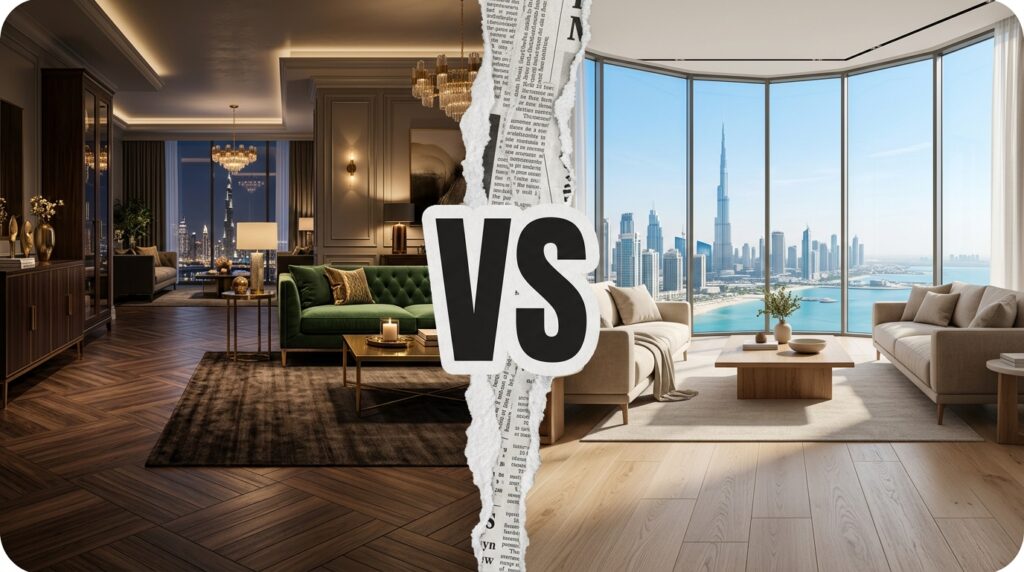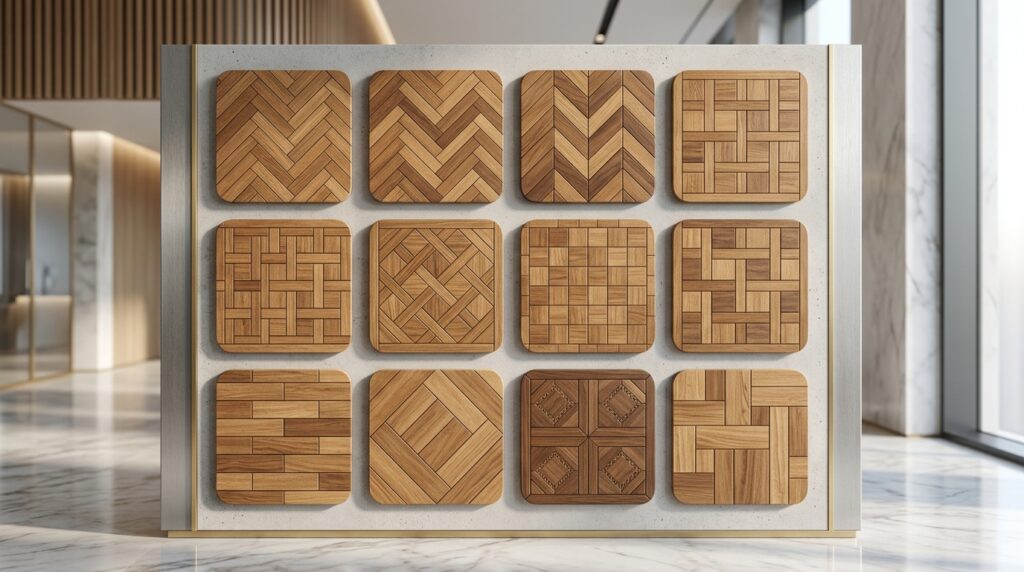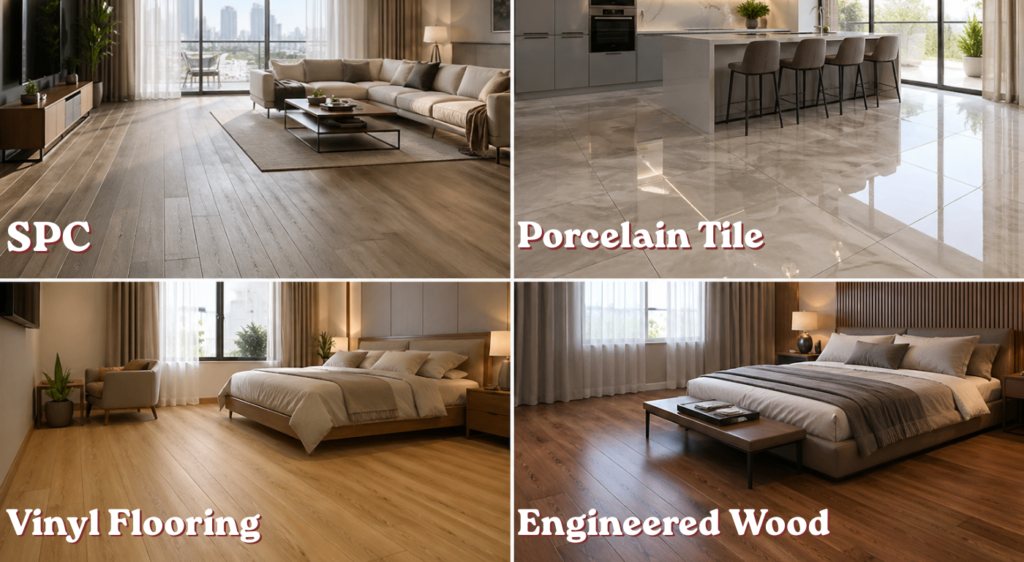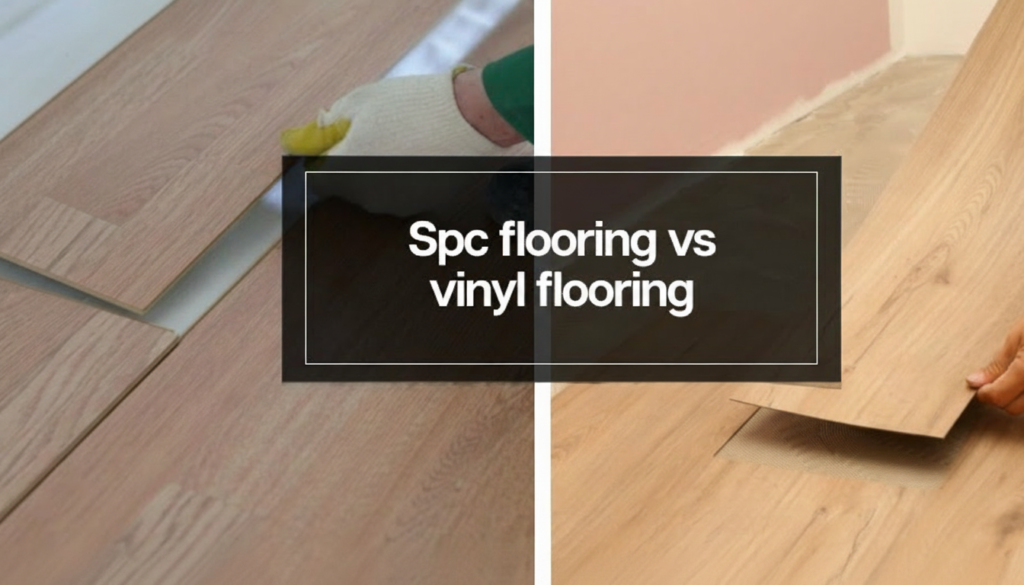
SPC Flooring vs Porcelain Tiles: Which Flooring Is Better For Dubai Homes In 2026?

Your flooring is not just a surface — it is a decision that affects your electricity bill, your cleaning routine, your renovation budget, and the resale value of your Dubai property for the next decade. Most homeowners spend weeks choosing their sofa color and approximately fifteen minutes choosing their floor. That fifteen minute decision then affects every single day of life in that home for years. In a city like Dubai where temperatures touch 45 degrees, humidity fluctuates dramatically, and living standards are genuinely world class, flooring is one of the most important investments you make in your home — and it deserves far more than fifteen minutes of attention.

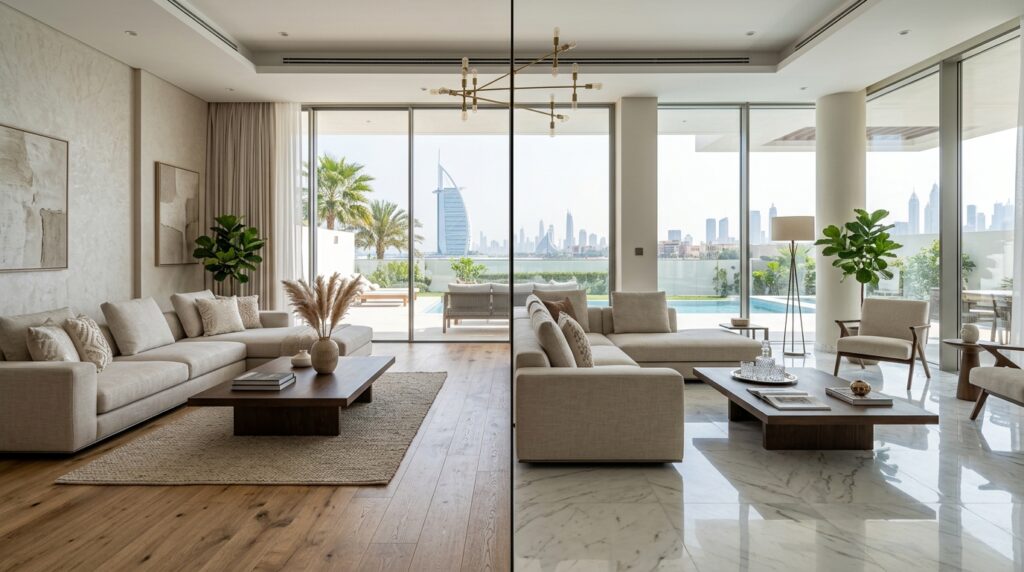
The two flooring options that every Dubai homeowner, interior designer, and property developer is talking about right now are SPC flooring and porcelain tiles. SPC Flooring Dubai demand has grown dramatically because it solves problems that traditional flooring never could — complete waterproofing, comfortable walking feel, fast installation, and realistic finishes at accessible price points. For Dubai premium homes porcelain tiles are the top pick. They feel cool on the feet and last long. They come in so many sizes and finishes that any room instantly looks expensive and professionally designed. Simply putting both options are excellent choices for any Dubai home. But they are excellent in very different ways for very different homes.

This guide cuts through every showroom sales pitch and gives you the raw honest comparison that Dubai homeowners actually need in 2026. Heat performance, water resistance, scratch resistance, installation time, maintenance requirements, cost over ten years, and suitability for different room types — everything is covered in plain simple language with zero technical jargon and zero bias toward either option. Whether you are renovating a JVC apartment, upgrading a villa in Arabian Ranches, or fitting out a brand new property anywhere in the UAE, this guide gives you the exact knowledge you need to choose with complete confidence and zero regret.
See Sample Spc Flooring

What is SPC Flooring?

Most flooring sounds impressive in a showroom and disappoints in real life. SPC flooring is the rare exception that actually performs better than it sounds. SPC stands for Stone Plastic Composite. It is a revolutionary rigid core flooring

material made by compressing natural limestone powder with poly vinyl chloride and stabilizing agents into a core so dense it simply refuses to warp, crack, bend, or buckle under any normal living condition. This is not regular

luxury vinyl flooring with a soft flexible base, this is a completely different level of hard, stable, and dependable underfoot performance. The stone composite core makes it genuinely waterproof flooring from the inside out and not just water resistant on the surface but completely impenetrable throughout the entire core structure regardless of spills, floods, or humidity.

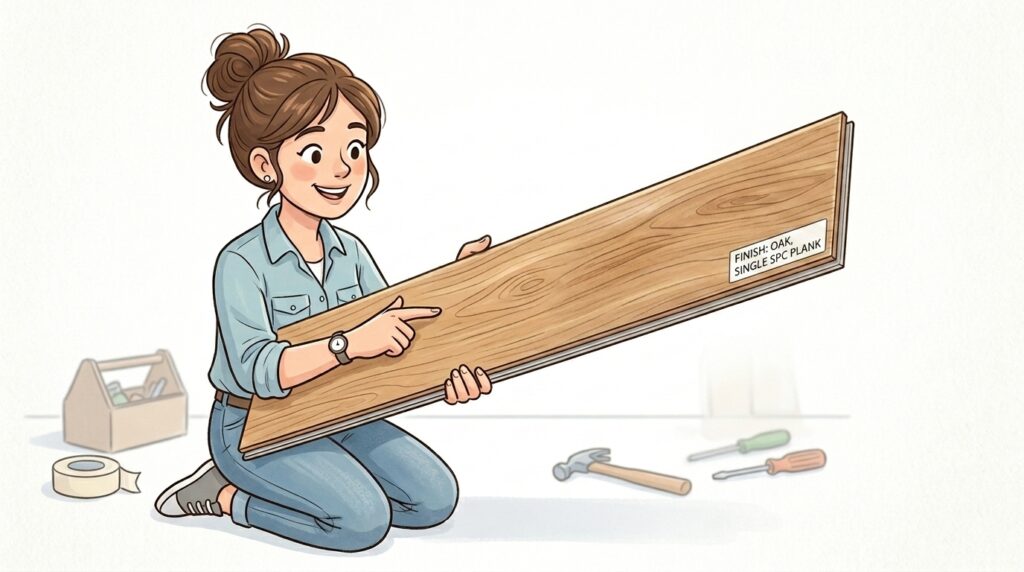
Pull apart any SPC plank and you will find five distinct layers each doing a specific job that makes the whole product perform at a level far above its price point. The bottom comfort layer absorbs impact and reduces footstep noise between floors. The rigid stone core sits above it — dense, flat, and unmovable. The high definition print layer

above replicates the exact look of real wood grain or natural marble so convincingly that even interior designers do a double take. The scratch resistant wear layer on top protects every detail underneath from daily damage that would destroy cheaper flooring within months. Finally the click lock system along every edge of every SPC plank allows the entire floor to snap together like a giant precision puzzle — fast, clean, glueless, and absolutely solid when complete.

What Are Porcelain Tiles?

If flooring materials had a strength competition porcelain would win every single round without breaking a sweat. Porcelain floor tiles are manufactured through one of the most intense processes in the entire building materials industry 

ultra fine natural clay combined with mineral additives, compressed under pressures that would crush most materials completely, and then fired at temperatures above 1200 degrees Celsius for extended periods. This extreme process does something remarkable to the raw material — it removes almost all porosity and fuses every single particle into a structure so dense and so hard that the finished

vitrified tiles are nearly impossible to scratch, stain, or damage under normal living conditions. Regular ceramic tiles go through a similar but significantly less intense process which is exactly why they end up softer, more porous, and considerably less durable than their porcelain counterparts in any serious real world comparison.

Density is where porcelain floors completely separate themselves from every other tile flooring option in the market. Quality porcelain tiles are almost completely waterproof and the numbers prove it. Out of every 200 drops of water that touch the surface. Only one single drop even tries to get inside. Just one. That makes porcelain tiles totally waterproof in a way that normal ceramic tiles cannot match at any cost.

For Dubai homeowners, this density advantage is enormous — outdoor terraces exposed to morning dew and afternoon heat, bathrooms steaming daily, kitchens handling constant water contact, and pool areas permanently wet all demand exactly this level of water resistance. Porcelain floor tiles manage every place with full trust and no risk, making them the clear king of indoor and outdoor tile floors. Porcelain floor tiles work in all places with full trust and no fail, making them the clear king of indoor and outdoor tile floors.

SPC Flooring vs Porcelain Tiles: Quick Side-by-Side Table

Most people research flooring for months and still feel lost at checkout. This table fixes that problem in sixty seconds. Every real difference between SPC Flooring and Porcelain Tiles is laid out honestly across every factor Dubai homeowners actually care about — no showroom bias, no sales language, just pure straight facts.

FeatureSPC FlooringPorcelain Tiles
Lifespan 15 to 20 years30 to 35 years
Cost Budget friendly, AED 25 to 60 per sqmPremium, AED 60 to 200 per sqm
InstallationQuick click lock and done in hoursSlow wet install and needs days to cure
Slow wet install — needs days to cureFully waterproof throughoutWater resistant — grout absorbs moisture
ComfortSoft warm and comfortableHard cool and rigid
NoiseSound absorbing and quietHard surface carries noise easily
RepairsOne damaged plank and replaced in minutesOne cracked tile and matching nearly impossible
MaintenanceSweep and mop — doneRegular grout scrubbing needed
Rental PropertyPerfect and tough fast to fix affordableGood and impressive but costly to repair
Dubai ClimateStable in extreme heat and humidityNaturally cool and great for hot summers

Durability Test: Which One Wins Long Life?

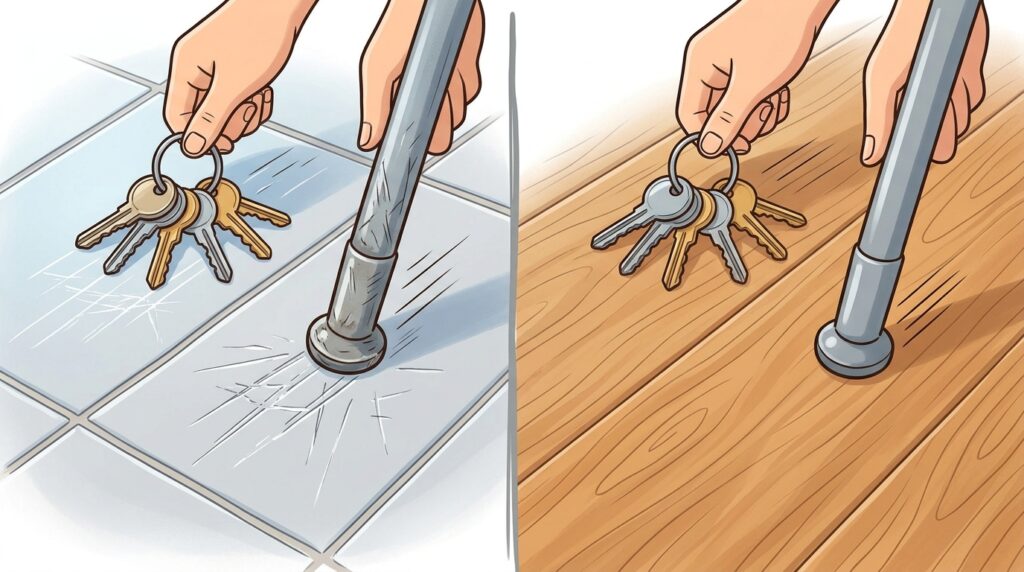
Scratch Fight: For scratch fight, the gap between SPC flooring and porcelain tiles is quite neat. Porcelain is one of the toughest materials used in any home. Keys, coins, pet claws, and dragged furniture barely leave a mark on its dense glass-like surface. Durable flooring does not get much harder than fully fired porcelain which scores extremely high on standard hardness tests used across the flooring industry.

See also  SPC vs Vinyl Flooring UAE – What You Need to Know

SPC flooring handles everyday scratches very well through its tough transparent wear layer on top and light scratches from daily foot traffic and small objects simply do not show. However sharp heavy objects dragged forcefully across SPC can leave visible marks that porcelain would shrug off completely without any visible damage whatsoever. For scratch resistance porcelain holds a clear advantage that becomes especially obvious in high traffic areas.

Impact Resistance: Impact resistance is where SPC flooring completely flips the script and takes a commanding lead over porcelain tiles. Drop a heavy object on porcelain and there is a very real chance of cracking, especially on larger format tiles where the unsupported span between grout lines creates vulnerability to sudden sharp impacts. Porcelain is hard but hardness and impact resistance are two completely different qualities and porcelain struggles significantly when force is applied suddenly from above.

SPC flooring handles impacts very differently because its rigid core has a slight natural flexibility that absorbs shock rather than cracking under it. Dropped pots, falling furniture, children’s toys thrown with full toddler energy — durable flooring made from SPC absorbs all of this without cracking, chipping, or showing permanent damage. For families with children or anyone living an active daily life SPC impact resistance is a genuine game changing advantage. 

Lifespan and Furniture Movement: Lifespan is where porcelain tiles reclaim their crown and wear it confidently. Quality flooring made from porcelain genuinely lasts 30 to 50 years  and sometimes longer in well maintained indoor environments. The tile itself essentially does not age and it cannot rot, fade, or deteriorate from normal use over decades of service. SPC flooring delivers a very respectable 15 to 25 year lifespan which comfortably outperforms most other modern flooring options but simply cannot match the generational durability that porcelain offers. For furniture movement porcelain wins again. Heavy sofas, beds, and dining tables can be slid across porcelain without significant surface damage. SPC requires felt pads under all furniture legs to prevent wear layer damage from repeated heavy movement across the same surface areas. 

Winner Box Lifespan Winner — Porcelain Tiles: Nothing beats porcelain for long term durability — 30 to 50 years of reliable performance makes it the generational flooring champion for any Dubai home. Impact Resistance Winner, SPC Flooring SPC absorbs shock, survives drops, and handles active family life without cracking — making it the clear winner for homes where real daily life happens at full speed. 

Waterproof Performance In Kitchens And Bathrooms

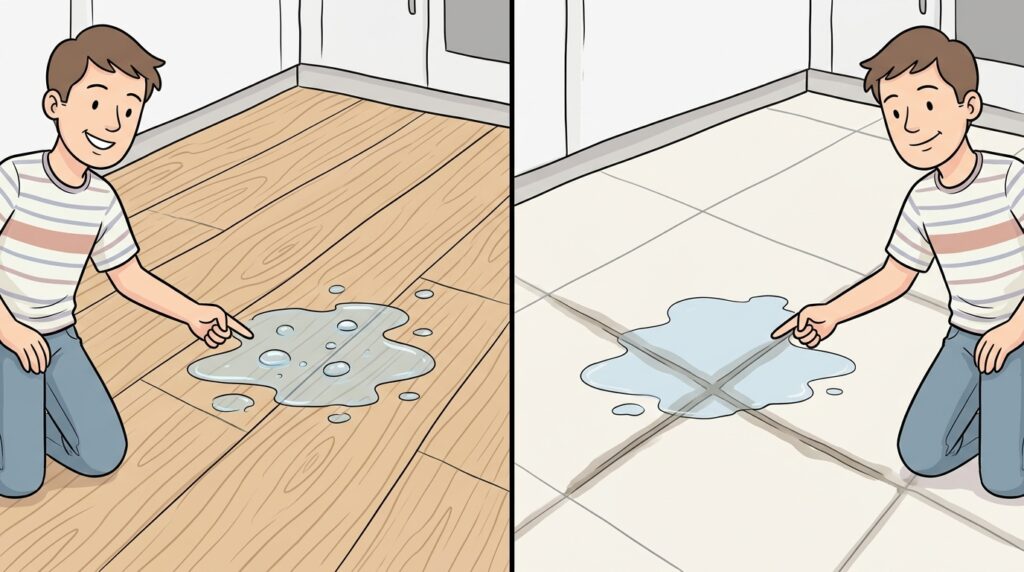
Here is the tile truth nobody mentions in the showroom. The tile itself is waterproof, but the grout holding it together absolutely is not. Every bathroom and kitchen floor in Dubai has many grout lines on it. A single one of those lines is a weak spot. Water can slink in via weak spots and cause damage with time. Every day without stopping. All of that moisture presses against grout lines constantly, and grout, being a porous cement material, absorbs it gradually and silently until subfloor damage appears and repair bills follow immediately after.

SPC flooring eliminates the grout problem completely because it has no grout lines anywhere in its entire installation. Every SPC plank connects to the next through a tight click lock system that creates a surface with no gaps, no joints, and no entry points for water to penetrate downward. The rigid stone plastic composite core is 100 percent waterproof throughout its entire thickness and not just on the surface but all the way through to the bottom layer. Spills, splashes, steam, and humidity that are completely normal in kitchen flooring and bathroom flooring environments simply sit on top of SPC and wipe away cleanly without ever reaching the subfloor. For Dubai apartments where bathrooms and kitchens are used heavily every single day this waterproof core is not a luxury feature, it is a daily necessity.

Moisture penetration over time is what separates good waterproof flooring from flooring that merely appears waterproof on the surface. In Dubai apartments where humidity levels fluctuate significantly between heavily air-conditioned interiors and hot humid outdoor air, subfloor moisture is a constant background threat that most homeowners never think about until damage appears. Porcelain tile grout absorbs this ambient moisture gradually and consistently  and creates conditions where mold, subfloor swelling, and tile loosening can develop slowly over years. SPC flooring with its fully sealed waterproof core creates a complete moisture barrier between whatever happens on the surface and the subfloor structure underneath. For kitchen flooring and bathroom flooring in Dubai apartments, this complete moisture barrier is what makes SPC the genuinely safer and smarter long-term choice.

Comfort Underfoot: Which Feels Better Daily?

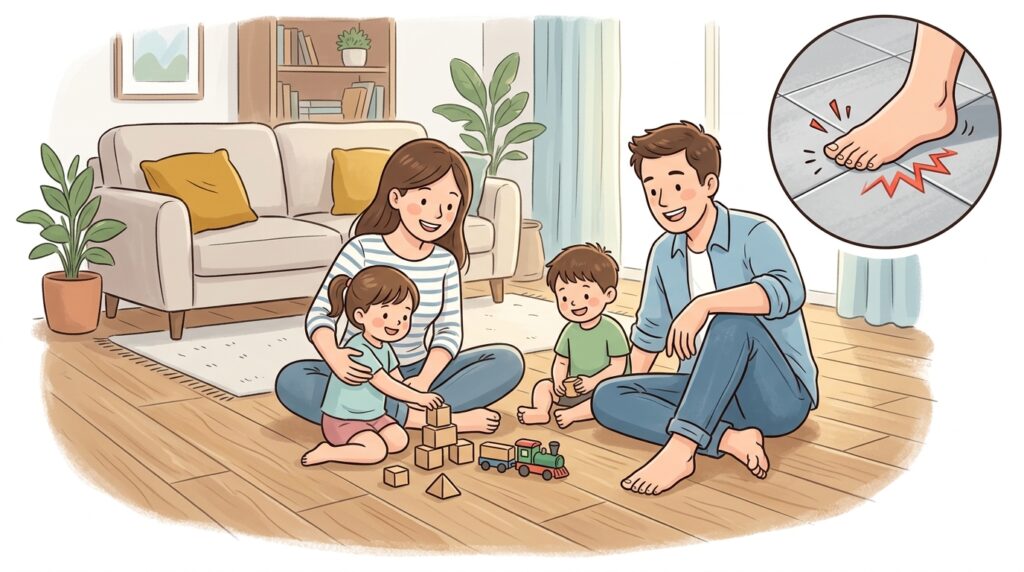
Have you ever come home after a long day and noticed that deep aching tiredness in your heels and joints? That feeling has a name. It is called foot fatigue. And porcelain tiles are one of the biggest causes of it in Dubai homes. Their hard unforgiving surface puts pressure on your feet all day long and by evening your body quietly lets you know it has had enough.

Porcelain is completely hard with zero flexibility or cushioning underneath your feet whatsoever. Every step you take on porcelain transfers the full impact directly into your joints with nothing absorbing the shock in between. SPC flooring has a built-in underlayer that absorbs each footstep gently and makes walking feel noticeably softer, more comfortable, and significantly less tiring across long periods of daily movement throughout every room of your home.

For elderly people and young children daily floor comfort is not a preference. This is genuinely important for physical wellbeing and not something to overlook. Elderly family members with joint pain, knee problems, or back issues feel the full hardness of porcelain tiles with every single step they take. A fall on porcelain is also far more dangerous than a fall on SPC because there is zero surface give to reduce impact. Children who spend hours sitting, crawling, and playing directly on the floor feel the cold hard surface of porcelain uncomfortably , especially during Dubai winters when tile thermal comfort drops significantly and floors feel genuinely cold underfoot for hours every morning until the room warms up properly.

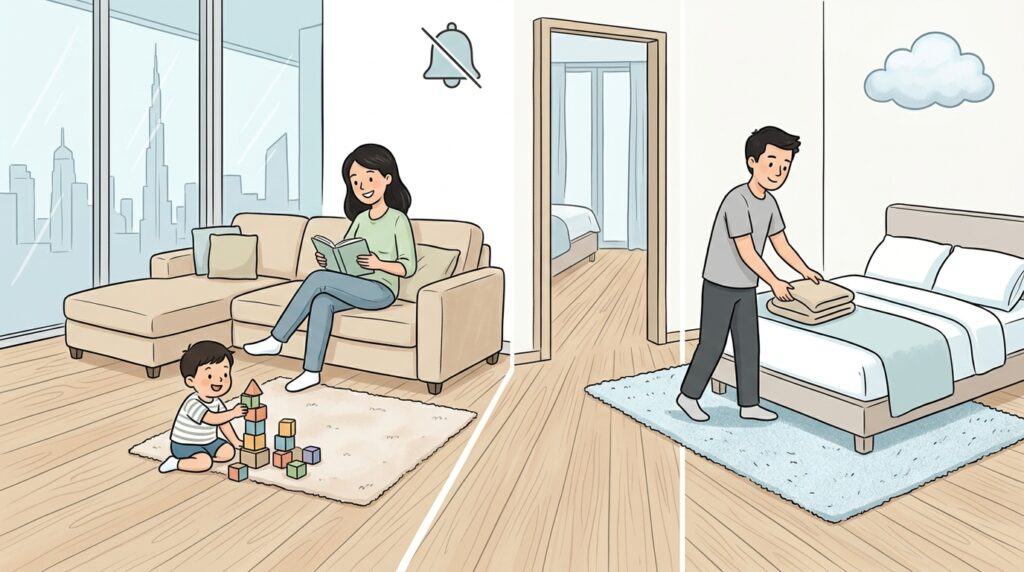
Noise reduction is another daily comfort difference that most people never consider until they actually live with both options. Porcelain tiles make every sound louder. Footsteps echo, dropped items make sharp loud noises, and normal movement around the home sounds much harder and busier than it really is. SPC flooring absorbs sound naturally through its underlayer. Footsteps become quieter, dropped items land with a softer sound, and the whole home feels noticeably more peaceful and relaxed every single day. For Dubai apartments where families live in close proximity and daily noise travels easily between rooms, SPC noise reduction creates a genuinely more comfortable and calm living environment every single day.

See also  SPC Flooring vs Marble in Dubai – Which is Better for Villas? (2026 Guide)

Which Flooring Handles Dubai Weather Better?

Heat: Does your floor actually get damaged by Dubai heat? The answer depends entirely on what material it is made from. The Dubai climate pushes temperatures above 45 degrees regularly between June and September — and that extreme heat affects every surface inside your home including the floor underneath your feet. Porcelain tiles handle direct heat brilliantly —

their densely fired structure does not expand, warp, or crack under high temperatures making them naturally stable in hot conditions. SPC flooring handles UAE weather conditions very well too but requires proper installation with expansion gaps around room edges because its composite core responds slightly to extreme temperature changes by expanding marginally — a normal engineered material behavior that good installation always accounts for.

Air Conditioning: Here is something that the climate of Dubai creates that most flooring guides never discuss — the daily battle between scorching outdoor heat and heavily air conditioned indoor spaces. Your floor experiences this temperature swing every single day as doors open, people move between spaces, and AC systems cycle on and off throughout the night. Indoor temperature changes between fully cooled rooms and warm corridors create expansion and contraction stress on flooring materials constantly.

Porcelain handles these temperature changes without any movement whatsoever due to its rigid dense structure. SPC flooring manages this daily stress very well through its engineered composite design — but cheaper quality SPC products can show gapping or buckling over time if installation expansion gaps were not correctly maintained from the beginning.

Dubai’s weather creates two very specific challenges that affect floors in ways you simply do not find anywhere else in the world — extreme humidity and fine desert sand dust. Dubai humidity shifts constantly between coastal areas, air-conditioned rooms, and open outdoor spaces all at the same time. This creates non-stop moisture pressure on your floors

from every direction. Porcelain handles all of that humidity perfectly because it absorbs almost zero water. Moisture simply has nowhere to go and no way to cause any damage. SPC waterproof core handles humidity equally well with no swelling, warping, or moisture damage at any level. Sand dust however is where both floors face the same daily challenge — fine desert particles act like microscopic sandpaper on any floor surface and require regular gentle cleaning to prevent gradual surface micro-scratching that dulls appearance over time.

Apartment Living: For Dubai climate apartment living specifically, both flooring options face unique challenges that villa homeowners never experience. High rise apartments experience more dramatic indoor temperature changes as upper floors absorb more solar heat through ceilings and windows simultaneously.

Humidity from neighboring units, shared plumbing systems, and building facade condensation adds additional moisture pressure that ground floor or standalone properties never deal with. Porcelain performs consistently well in these high rise conditions due to its complete structural stability. SPC flooring performs excellently in apartment environments too — its waterproof core handles building moisture perfectly and its click lock floating installation actually allows it to move slightly with UAE weather conditions related building movement without cracking or separating at the joints.

Installation Process Comparison

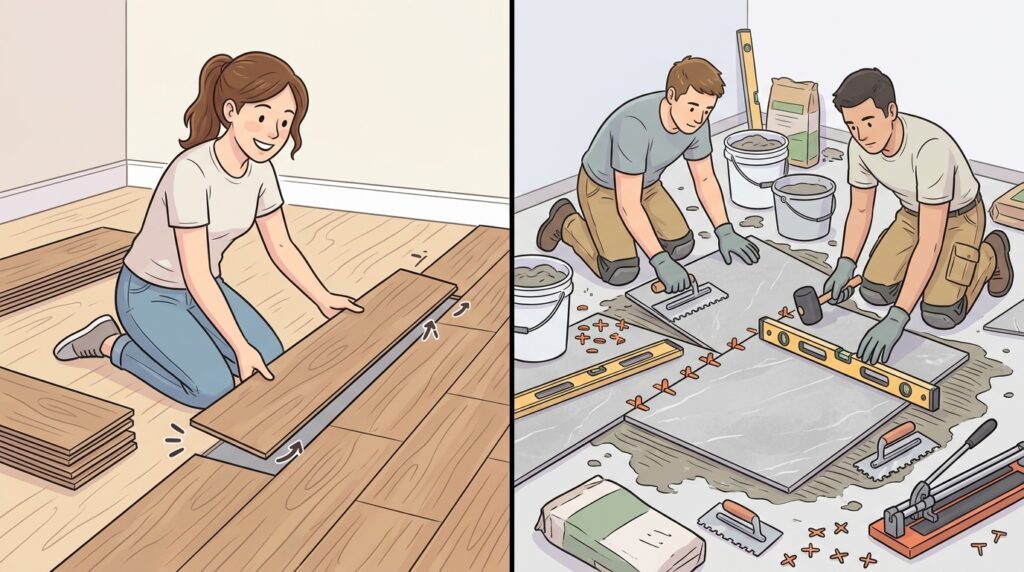
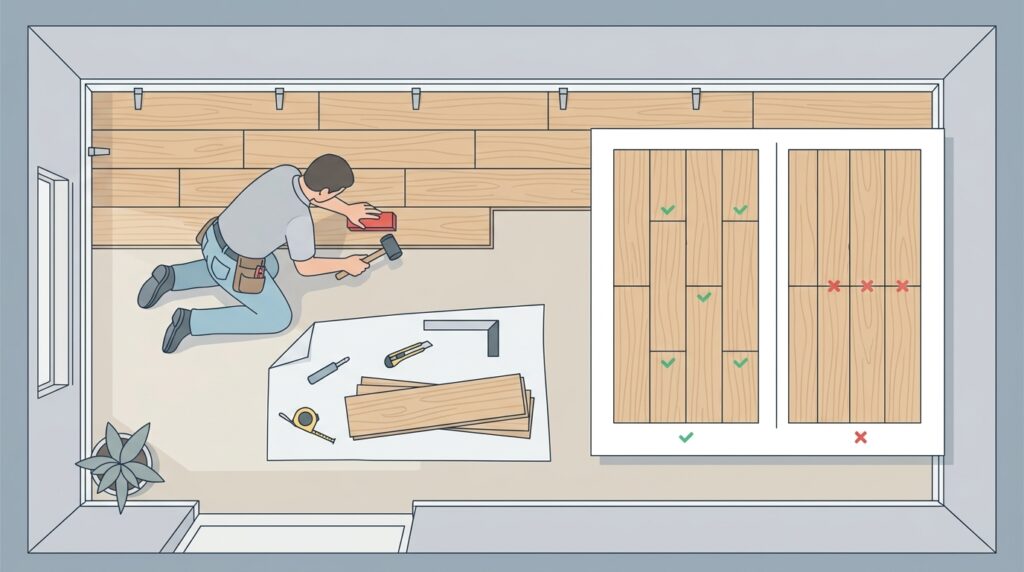
Click Lock SPC: Have you ever built a puzzle? SPC flooring installation Dubai feels almost exactly like that — satisfying, simple, and something almost anyone can do without professional help. Every SPC plank clicks firmly into the next one with a simple push and click movement. No glue needed, no nails, no mixing, and no drying wait before walking on it. The entire floor floats above the subfloor as one strong connected surface ready to use the exact moment the last plank snaps into place. Fast, clean, and completely effortless installation every single time.A standard Dubai apartment bedroom can be completely finished with SPC flooring in just a few hours by one person working alone comfortably.

Tile Installation: Porcelain tile installation is a completely different experience that requires professional skill, proper tools, and significant patience before the finished floor can be used. The subfloor must first be perfectly leveled — any unevenness causes tiles to crack under pressure over time. Adhesive mortar is then spread evenly across the subfloor and each tile is pressed firmly and precisely into position. Spacing between tiles must be perfectly consistent for grout application later. After all tiles are set the adhesive requires 24 to 48 hours of curing time before anyone walks on the surface. Grout is then applied between every tile and requires another 24 hours of drying time before the floor is fully usable and ready for furniture placement.

Project Duration: The total project duration difference between SPC and porcelain tile installation is genuinely significant for anyone living in their Dubai home during renovation. A full apartment SPC installation can realistically be completed in one to two days with minimal dust, minimal noise, and zero waiting time before moving furniture back into position. Porcelain tile installation for the same apartment takes four to seven days minimum — including subfloor preparation, tile laying, adhesive curing, grouting, and final grout drying before the space is usable again. For Dubai homeowners renovating occupied homes, the SPC installation timeline creates far less disruption to daily life than the multi-day wet process that porcelain tile installation always requires.

Task SPCPorcelain 
Installation Time 1 to 2 days4 to 7 days
Dust Level Very lowHigh — cutting and grinding 
Drying Time Zero — walk on immediately 48 to 72 hours minimum 
DIY Friendly Yes — anyone can do it No — needs professional 

Maintenance And Cleaning Requirements

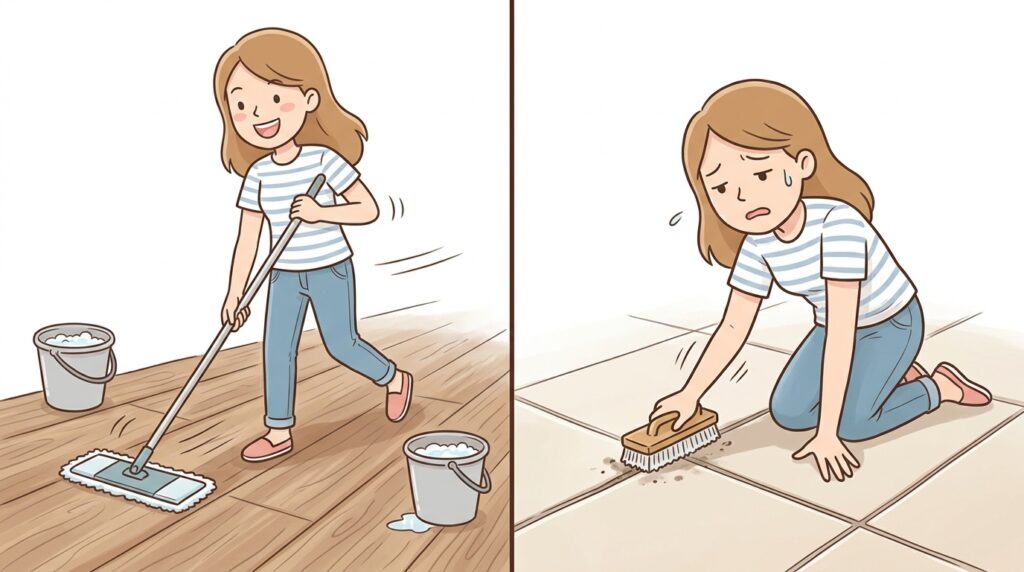
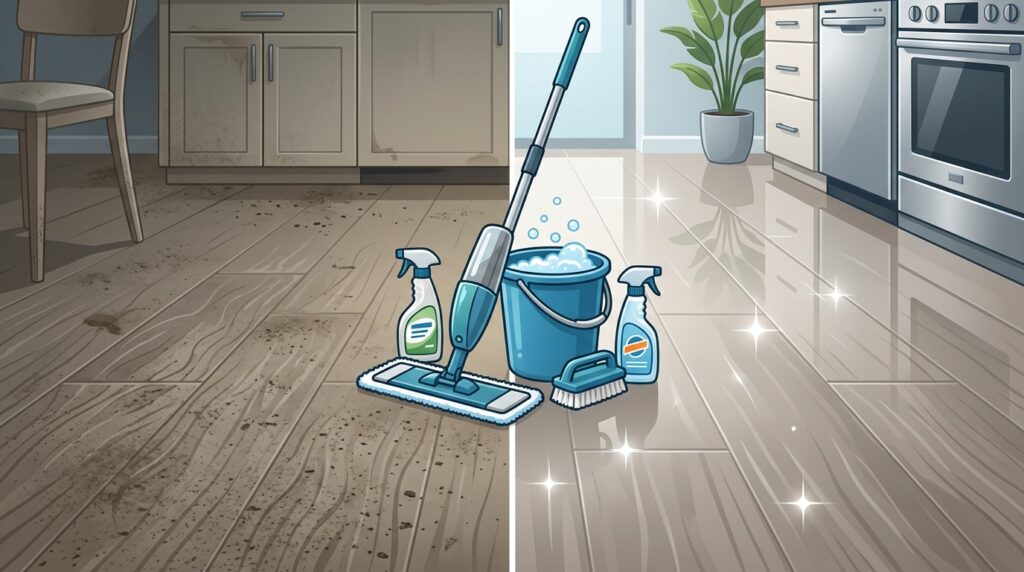
Daily Cleaning: Here is the daily cleaning truth that every Dubai homeowner should know before choosing between these two floors. SPC has no grout lines and porcelain does, and that single difference determines your entire daily cleaning experience for as long as you own the floor. SPC is a low maintenance flooring. SPC daily cleaning is one smooth continuous surface that a damp mop covers completely in minutes. Porcelain daily cleaning is a tiled surface plus dozens of recessed grout lines that collect dust, sand, and kitchen residue daily and resist proper cleaning from a standard floor mop. One floor cleans fast and completely. The other cleans partially and requires extra effort to address what the mop consistently misses.

Stain Removal: SPC stain removal is almost insultingly easy — liquid spills sit on the non-porous wear layer surface, get wiped with a damp cloth, and disappear completely without leaving any evidence behind. Colored spills, cooking oil, children’s drink accidents — all handled quickly and completely with zero lasting impact on the floor appearance. Porcelain tile surfaces handle stains just as easily on the tile body. The grout lines however are a permanent vulnerability — colored liquids absorb into porous grout and gradually build a staining history that regular cleaning cannot fully reverse. Over years of Dubai family life grout lines in kitchens and dining rooms tell a visible story of every meal, every spill, and every cleaning shortcut taken.

See also  Best Flooring for Dubai Climate (SPC vs Tiles vs Vinyl vs Wood)

Cost Comparison In Dubai

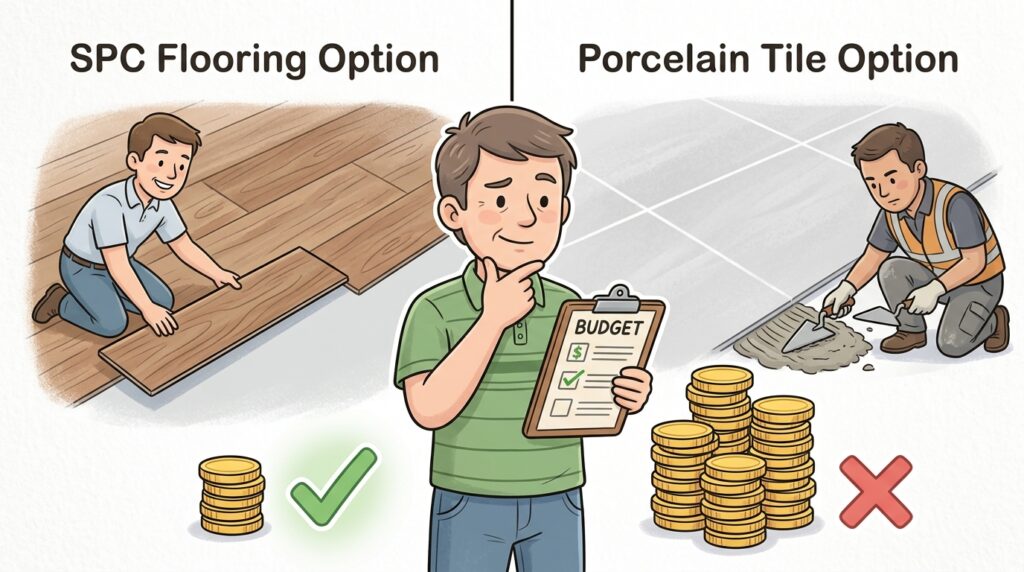
Material Cost: The material cost gap between SPC flooring and porcelain tiles in Dubai is large enough to fund an entire second room renovation if the savings are redirected intelligently. SPC flooring material currently ranges from AED 25 to AED 120 per square meter covering everything from basic residential options to premium large plank wood effect designs. Porcelain tile material starts at AED 60 per square meter for entry level options and reaches AED 250 or beyond for premium imported large format ranges from European manufacturers. At comparable quality and visual finish levels SPC consistently delivers similar aesthetic impact at 40 to 60 percent of the porcelain material cost — a difference that compounds significantly across any full apartment or villa renovation project.

Labor Cost: Material savings from choosing SPC are significant but labor cost savings are where the total budget difference becomes genuinely dramatic for Dubai homeowners. SPC professional installation in Dubai runs AED 8 to AED 15 per square meter — fast, clean, and complete in one to two days for most apartments. Porcelain professional installation runs AED 25 to AED 50 per square meter — skilled work requiring subfloor preparation, precise adhesive application, consistent spacing, full grouting, and multi-day project completion. For a standard 120 square meter Dubai apartment the labor cost difference alone reaches AED 2,000 to AED 4,200 — money that covers furniture, painting, or electrical upgrades without touching the original renovation budget at all. 

Repair Cost: Repair cost is the financial surprise that catches Dubai porcelain tile owners completely off guard when damage eventually occurs. One cracked tile triggers a chain of costs — professional labor, adhesive, grout, and most expensively the near-impossible task of finding an exact tile match from the original production batch. Total repair cost for a single damaged tile area in Dubai typically runs AED 300 to AED 800 minimum and often looks visibly different from surrounding original tiles regardless of how carefully the work is done. One damaged SPC plank costs AED 50 to AED 150 in materials, clicks out and back in within fifteen minutes, and matches surrounding planks perfectly because replacement planks from the same range are always available.

Cost Factor SPC Flooring Porcelain Tiles 
Material AED 25 to 120 per sqm AED 60 to 250 per sqm 
Installation AED 8 to 15 per sqm AED 25 to 50 per sqm 
Repairs AED 50 to 150 per incident AED 300 to 800 per incident 
Maintenance Free — just mop regularly Grout resealing every 2 to 3 years 


SPC Flooring vs Porcelain Tiles For Different Property Types

Different properties have different floors for very good reasons. What works perfectly in a luxury villa entrance fails in a rental apartment. What works brilliantly in a family bedroom fails on an outdoor terrace. Match your flooring to your property type and both options deliver outstanding results.

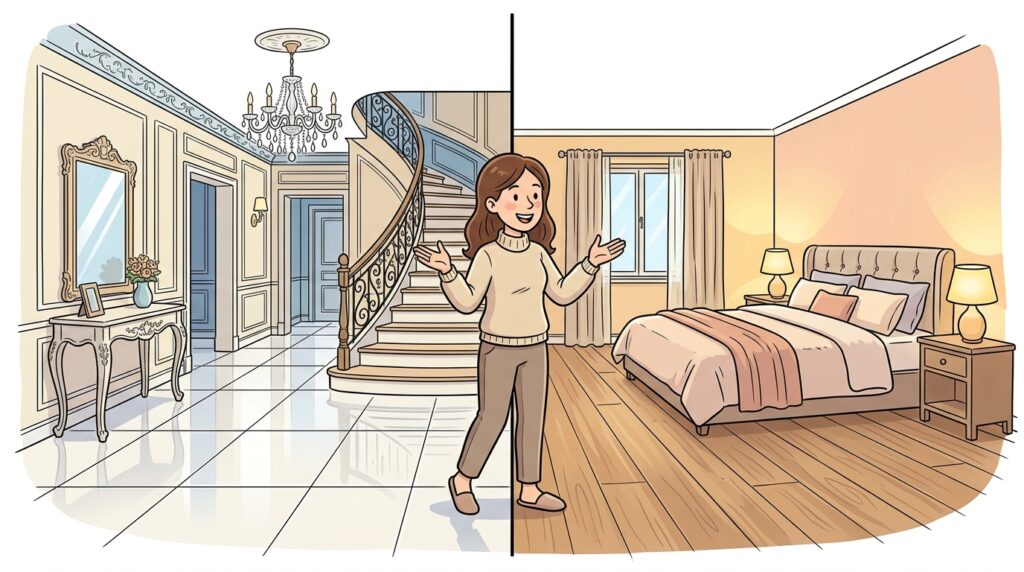
Best For Villas: Smart villa flooring Dubai decisions use both materials in the right zones for maximum results. Porcelain tiles dominate villa ground floors, entrances, outdoor terraces, and pool surrounds where their premium cool surface and scratch resistant durability create the high end statement that villa ownership deserves. SPC flooring belongs in villa upper floors, bedrooms, home cinema rooms, and children’s zones where warmth, sound absorption, safety, and easy maintenance create a comfortable private retreat within the larger luxury property. 

Best For Apartments: Dubai apartments flooring are where SPC flooring genuinely dominates the comparison. The click lock installation creates minimal disruption in occupied buildings, the waterproof core handles apartment humidity perfectly, and the comfortable warm surface makes smaller spaces feel more inviting and livable. Porcelain works excellently in apartment bathrooms and entrance areas where its cool hard surface and premium appearance create strong first impressions. For main living areas, bedrooms, and dining rooms in Dubai

FAQ

Does SPC flooring increase home value?

Yes without any doubt. Buyers and renters in Dubai want homes that look amazing and feel genuinely comfortable every single day. Installing good quality SPC flooring in the right rooms delivers exactly that every time. One smart flooring upgrade can definitely make your property more attractive and increase its overall value significantly.

Which flooring lasts longer in Dubai?

Porcelain tiles last longer. In Dubai conditions porcelain tiles can easily last 30 to 50 years with basic care. SPC flooring lasts around 15 to 25 years. Both are strong and durable but porcelain simply has a longer lifespan when properly maintained in Dubai’s tough climate.

Which flooring is easier to repair?

SPC flooring and it is not even close. One damaged plank clicks out and a new one clicks straight back in. No special tools, no mess, no drama whatsoever. Porcelain tile repair is harder and more expensive than most people ever plan for. Designs change and colors get discontinued over time making finding an exact matching tile years later a genuinely difficult and frustrating challenge.

What is the cost difference between SPC and porcelain flooring?

SPC flooring costs less than porcelain tiles. Porcelain tiles are more expensive to buy and also cost more to install because they need a professional to lay and grout them properly. SPC flooring installs faster and cheaper. However porcelain lasts longer so over many years the total cost difference between the two becomes much smaller than it first appears.

Can SPC flooring be installed over tiles?

Yes absolutely and this is one of the most loved features of SPC flooring. You can install it directly over your existing tiles without removing a single one. No demolition, no mess, no expensive removal costs. The precision click lock system snaps everything together quickly and cleanly leaving you with a beautiful new floor in a fraction of the time.

Fill out this field
Please enter a valid email address.
Fill out this field
Other

Related Articles

You must be logged in to post a comment.